Book Review - Evil: A Study of Lost Techniques
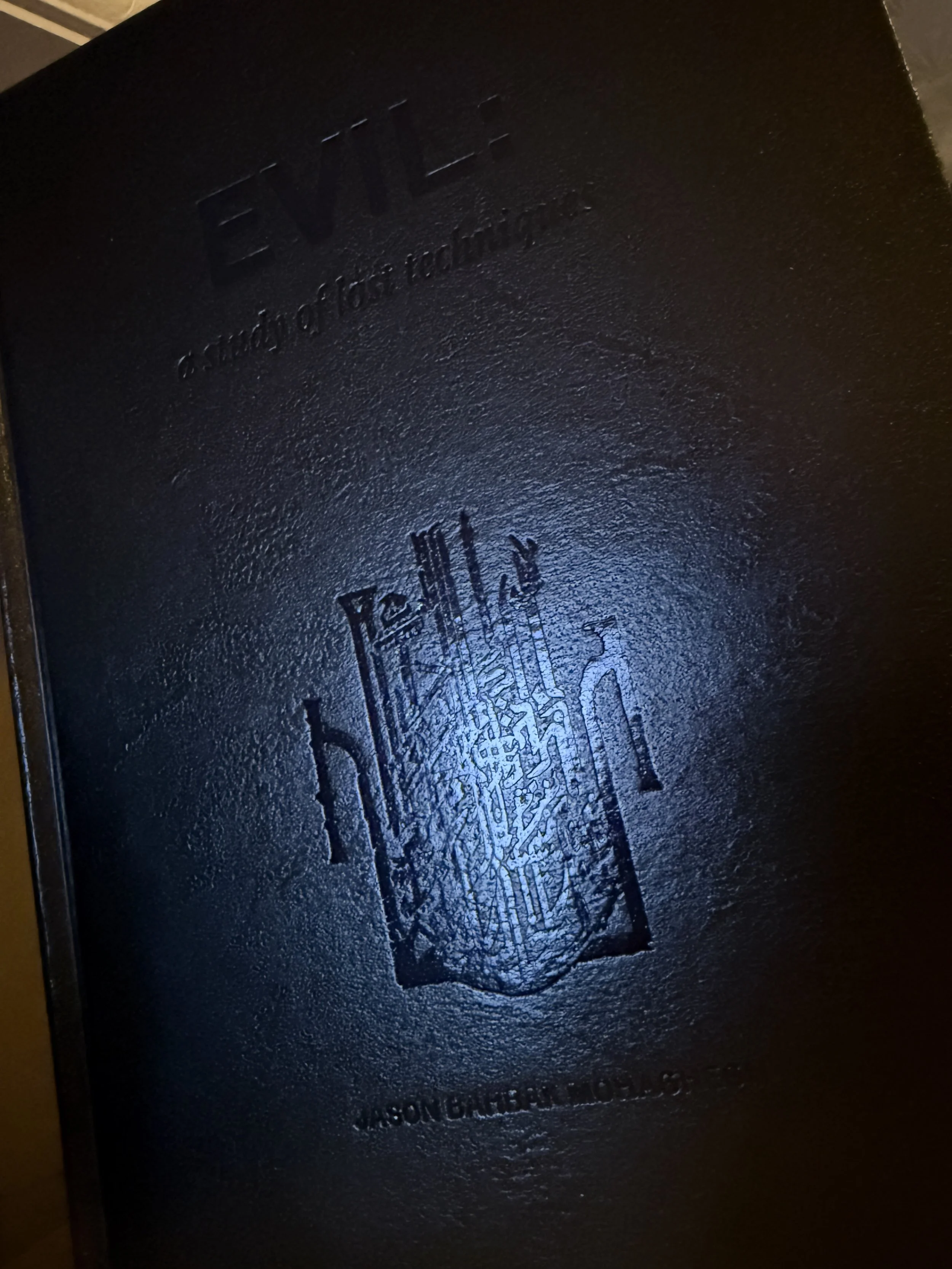
Jason Bahbak Mohaghegh’s Evil: A Study of Lost Techniques is an unusual and often compelling work that attempts to prise open the idea of evil by treating it not as a moral category but as an aesthetic and conceptual field. The book does not concern itself with ethical wrongdoing or the familiar language of harm and consequence. Instead it explores evil as a mood, an atmosphere, or a capacity for extremity in human behaviour. This approach allows Mohaghegh to wander across a wide range of ideas and literary forms. It also creates moments of real originality, although the method sometimes leaves the argument drifting and unanchored.
One of the strengths of the book lies in its willingness to observe the smallest gestures and treat them as potential techniques. Mohaghegh pays attention to silences, hesitations, minor turns of thought, and shifts in tone. When this works, it produces sharp insights. For instance, his sections on the threat and the whisper show how the smallest inflection of speech can alter the balance between two people. He captures the way uncertainty or half speech can carry more force than fully expressed hostility. These passages demonstrate an astute literary sensibility and an ability to treat language as a field of tension rather than as a simple vehicle for meaning.
The book also excels in its construction of strange architectural and geographical spaces. The final section on the libraries, with its various coordinates, is one of the more striking examples. These sites are presented as containers for forgotten modes of thought, and the descriptions combine anthropology, surrealism, and philosophy in a way that feels genuinely inventive. Mohaghegh is at his best when he creates these speculative spaces and invites the reader to imagine how a culture might store its most dangerous ideas. The writing becomes vivid, and the fragments feel purposeful rather than merely stylistic.
However, the central concept of evil requires a significant leap of faith. Because Mohaghegh redefines evil in purely aesthetic terms, many of the techniques he describes have little or no connection to what most readers would recognise as evil at all. A silence, a riddle, or an instance of ecstatic abandon can be harmful only in very specific contexts. Without those contexts, the term evil begins to feel stretched and even theatrical. The book risks collapsing into a study of intensity or strangeness rather than the subject it claims to address. This creates a gap between the title and the content, and the book rarely stops to justify the redefinition that underpins its entire project.
There are moments where this reframing works well. When Mohaghegh writes about cruelty, derangement, or atrocity as forms of excess, the connection to evil feels more natural. He can show how extremity and transgression exceed ordinary ethical categories. Yet these stronger passages highlight the inconsistency of the approach. The book moves quickly from extreme states to very slight gestures without reflecting on whether they belong to the same field. The result is a flattening effect in which all forms of disruption or deviation are absorbed into a single concept. This can be stimulating, but it also weakens the structure of the argument.
The fragmented format is both a strength and a limitation. The short notes and sketches encourage a sense of exploration, and they give the book a dreamlike quality that suits its subject. Yet the same fragmentation makes the argument difficult to follow. There are times when the text relies on atmosphere instead of explanation, and the style begins to obscure rather than enrich the ideas. Readers who prefer clarity or a more disciplined structure will find parts of the book hard to engage with.
To its credit, Evil: A Study of Lost Techniques never pretends to be a work of conventional philosophy. It is closer to a conceptual art project or a piece of speculative fiction than to a moral treatise. When read with this in mind, the book can be rewarding. It offers a collection of unusual reflections, imaginative spaces, and poetic inversions. It asks the reader to consider how subtle movements in thought and speech might shape a hidden architecture of human behaviour. Where it falters is in its insistence on naming this entire field as evil. Where it succeeds is in creating a series of atmospheric meditations on extremity and the margins of experience.
It is therefore a book that benefits from being read on its own terms rather than by the promises of its title. Taken as a work of dark poetics, it contains moments of force and creative insight. Taken as a study of evil, it sits on far weaker ground. The most productive reading positions the book as an imaginative experiment that treats the outer edges of thought as its true subject. On that level it offers something distinctive, even if it never fully resolves the tension between its ambitions and its methods.